
Story by Musanjufu Kavubu Benjamin
Central Rugby Championship is over, but something lies behind the curtains, and it is being told from a person who took part in the tournament. I am a part-time Mukono Hawks player, a Kyambogo University graduate, and previously a player, manager, and administrator at the Kyambogo Rugby Club, in the past I have also volunteered as the General Secretary of CURA. I witnessed this tournament emerge piece by piece.
This is a real-life tale of how the championship was organized as it appeared to me, a player and rugby lover who traveled to watch even when Mukono was not playing on a specific day, to be honest, this is a critique of the Uganda Rugby Union (URU) and a special jab to the Central Uganda Rugby Association (CURA) amidst deep suspicions over how the whole process was carried out.
Right from the beginning, the tournament set ambitious schedules to have six legs and six travel legs, wherein five clubs travelled five times while hosting once to cut costs.
Planning the tournament was taken up by each leg in order to move continuously between different playing centers.
The Kisubi Pacers RFC and Lady Pacers hosted the very first event in the University of Kisubi. Later, Makerere had its turn to host the games, with Impis taking the lead in organizing for the day at their famous graveyard, followed by another turn in Gayaza, hosted by Rams.
The trip then moved to East of the Center region to Mukono, where Mukono Hawks had the privilege of hosting, before moving on to Entebbe.
In Entebbe unfortunately on that dull day only a single game was conducted under the watchful eyes of Lady Swans as they themselves faced Lady Pacers, Kyambogo Rugby couldn’t afford to travel so Rams their opponents were given a walkover but no bonus point, affecting their playoff position.
After the Entebbe leg, Kisubi Pacers RFC was disqualified from the tournament and CURA is still to provide the disciplinary hearing proceeding with what happened.
There was a scheduling debacle at Kyambogo, with the hosting Kyambogo Rugby Club stuck in the middle of disputes with the Kyambogo University Games Union, something that required Makerere University intervention to host another leg, a telltale sign of the never-ending rush to ensure continuity and functionality.
Makerere also housed the event that was to be conducted at Bunga, CURA should send Impis and Rams flowers for being seniors and keep such days.
Whilst the capacity of URU to address the logistics of grassroots rugby has been brought severely into question, CURA has addressed these issues with a fervour born only of deep-rooted commitment – even if that meant hosting a tournament on a shoe-string budget of UGX 2,362,500, the amount most clubs shell out for an individual training session.
URU allocations according to regions reveal a grossly disproportionate share. The North received UGX 24,495,000 while they say it Is because the region spans the most distances to go to places most likely incurring the Walkovers, West UGX 6,279,000, and East UGX 2,745,000, yet Central – the thumping heartbeat of this story – received the miserly UGX 2,362,500. Then came another UGX 14,118,500 for officials and referees on top of it.
Instead of being directed at club development, these funds ended up covering administrative costs and turning a blind eye to the clubs’ basic needs—such as travel reimbursements, barely keeping up with rising fuel prices, where a liter of Petro costs UGX 4,700 compared to an approved reimbursement of UGX 3,500 per kilometer.
The Kyambogo saga Is particularly illustrative. Kyambogo Rugby Club a team vital to sporting culture, found themselves at odds with the Kyambogo University Games Union, while at Makerere it was a different story, Kisubi Pacers RFC is also a University based side and they too got all the support from their parent community.
There were demands for an official apology from the alumni and the University sports office’s failure to take the club’s problems seriously created a perception of internal strife and a lack of clear leadership. That’s how the Kyambogo leg never happened, because individuals were showing power.
Lacking a dedicated office on commercial, CURA’s efforts to secure additional sponsorships were hampered by structural inefficiency beyond their control, leaving them reliant on the goodwill and tireless dedication of volunteers who make up the CURA commercial think tank.
We can’t overlook the role of URU in this tale. The union’s plan for the region appears to be a theoretical piece of paper exercise rather than an actual structure which allows grass-root growth of Rugby.
It is depressing to find out that although the officials and the referees are getting copious financial assistance according to the numbers, the clubs themselves rather the actual cornerstones of Ugandan rugby are left to scrounge for themselves.
They still had to justify the officials’ and the referees’ needs even without having a budget. There was a case when the officials couldn’t start games before the hosts provided for their hydration needs. There was no tournament doctor from URU and no URU funded emergency ambulance for these tournaments.
The reality Is that URU’s model is skewed, with a strong bias towards high-level competitions and highest-level play without consideration for the required development of grassroots talent an imbalance that reflects the lack in URU’s capability in managing the sport it professes to advocate. This notwithstanding, the people aspect of the championship shone.
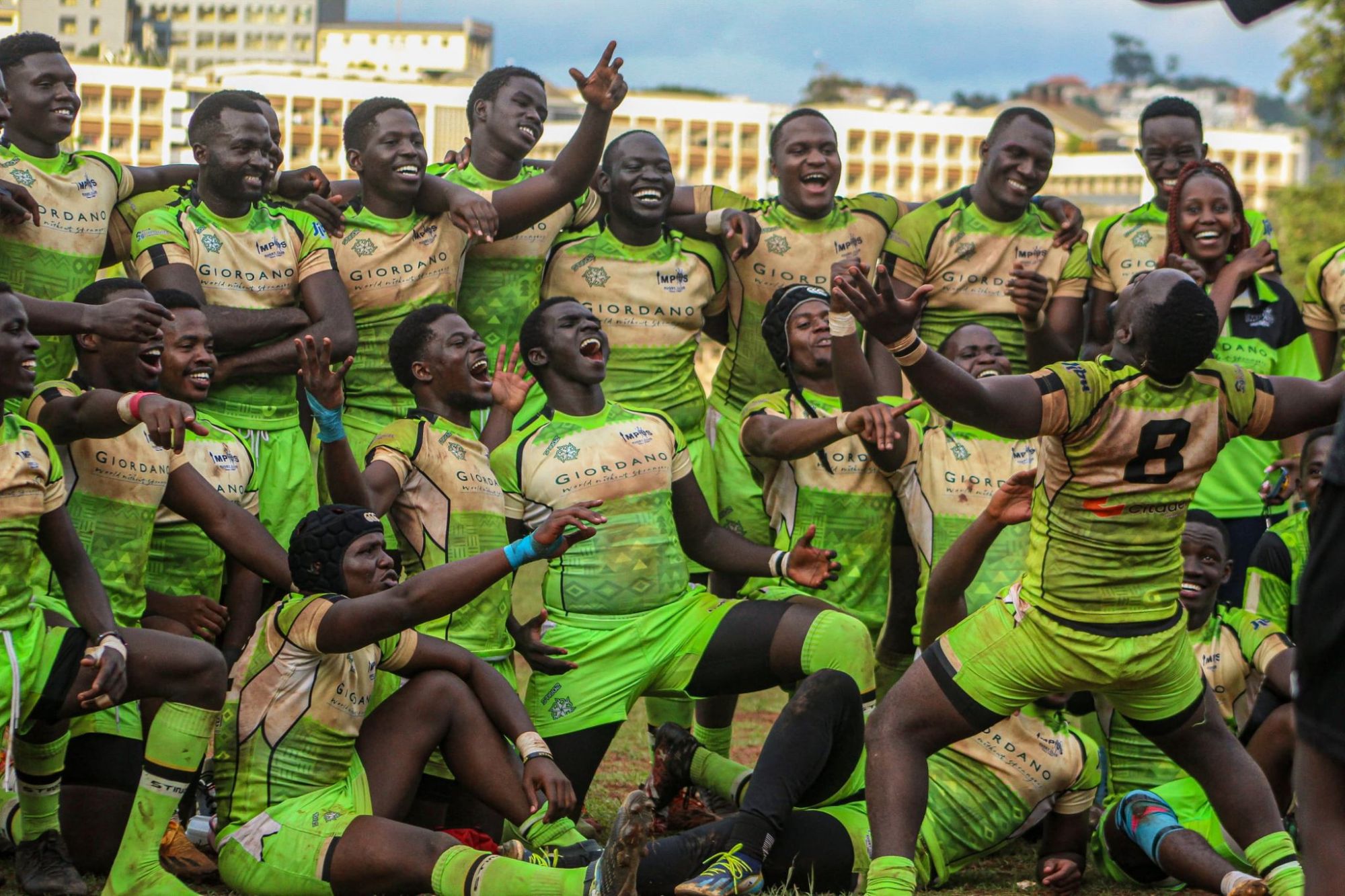
The clubs, though handicapped by a shortage of funds, proved most resilient as they negotiated through a schedule that was both tight and demanding. From the opening leg at the University of Kisubi to the rain-soaked semi-final on April 5th at Kyadondo and the final on April 13th when Impis defeated Rams, every step of the tournament was characterized by a sense of determination and devotion to the game.

The helter-skelter control of grounds, the haphazard schedule readjustments, and even the sudden withdrawal of teams were all devoured by rugby enthusiasts who breathe and exist—that is proof enough of how passionate each and every game truly is.
This piece is not meant to demean CURA but to underscore the glaring inadequacies of URU’s administration of amateur rugby in Uganda. The travails and small victories of this championship bare an urgent need for change, this is an appeal for a more level, open, and supportive strategy that recognizes the importance of nurturing talent at source.
Currently one thing is sure, if URU doesn’t rethink its priorities, harmonizing funds and support with regional teams’ true needs, the sport will continue to suffer at the very same level it needs most development.
In telling this tale, I wish to highlight a truth that lies behind the shiny headlines of high-level play. The Central Rugby Championship is over, but its lessons are not. The future of Ugandan rugby depends on a tough reassessment of how tournaments are organized, how funds are spent, and, most importantly, on raising the grassroots with the care, competence, and honesty that they deserve.
The next CURA season will surely have more clubs, with Mukono Hawks feeder Seeta Rugby Club and Kyambogo Rugby Club making informal inquiries about joining CURA and the news that a central team is to be relegated from the premier division. We can’t afford to have these kinds of stories told.


Leave a Reply